V Shajag Manual Vacuum Aspiration MVA Kit Syringe – Safe, Sterile & Effective
The V Shajag MVA Kit Syringe is engineered for safe and effective uterine evacuation in clinical settings. Designed for clinicians and licensed healthcare facilities, this Manual Vacuum Aspiration Kit MVA syringe delivers reliable suction performance while minimizing trauma, making it a practical option for early pregnancy loss, incomplete miscarriage management, and other gynecological procedures where controlled aspiration is needed.
Key features & benefits
Clinical-grade sterility — each kit component is sterile-packed and quality-checked to meet clinical expectations for safety.
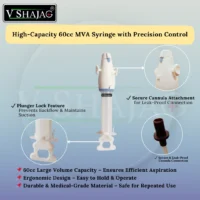
Optimized vacuum control — ergonomic syringe design gives clinicians precise control during the manual vacuum aspiration procedure without electrical power.
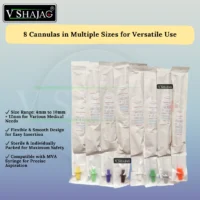
Modular supply compatibility — accepts standard cannulae and accessories so it fits easily into existing manual vacuum aspiration equipment & supplies workflows.
Cost-efficiency — lower device cost and simplified logistics make the kit a strong option when minimizing cost-per-procedure matters.
Adaptable for low-resource settings — compact, portable, and doesn’t require electricity, making it suitable where infrastructure is limited.
Clinical applications & context
The MVA Kit Syringe is intended for use by trained healthcare professionals for a range of indications including incomplete miscarriage treatment, retained products of conception management, and other uterine evacuation needs in the first trimester. It is commonly chosen where a manual, low-tech alternative is appropriate or where clinicians prefer manual control over electrical suction.
Procedure & alternatives
Manual Vacuum Aspiration MVA Kit Syringe is often compared with other approaches such as D&C (dilatation and curettage) and electric vacuum aspiration (EVA). Many clinicians prefer MVA because it typically results in faster recovery times and reduced instrumentation. When evaluating MVA vs D&C or manual vacuum aspiration vs electric vacuum aspiration, considerations include clinical setting, patient condition, clinician training, and equipment availability.
Safety, side effects & aftercare
V Shajag prioritizes patient safety: the Manual Vacuum Aspiration MVA Kit Syringe is sterile and designed to reduce tissue trauma. Common post-procedure effects can include cramping, light bleeding, and transient discomfort — these are typical and usually resolve as part of standard manual vacuum aspiration aftercare / recovery. Serious complications are uncommon when procedures are performed by trained personnel. Always follow accepted clinical protocols and local guidelines.
Training & protocol
Safe use of the MVA Kit requires competency: health facilities should ensure clinicians complete accredited manual vacuum aspiration training / protocol courses. Proper training reduces complications, improves procedural efficiency, and helps clinicians counsel patients on recovery and follow-up care.
Specifications & ordering
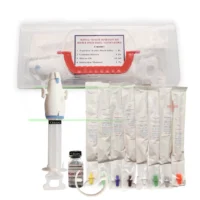
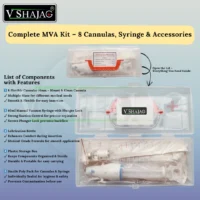
Components: sterile syringe body, plunger, connector, compatible cannula options (sizes available on request).
Packaging: single sterile kit / bulk hospital packs.
Purchase: available for hospitals, clinics, and registered medical suppliers — contact sales for suppliers / manufacturers / dealers pricing and MOQ.
Support: clinical usage guidance (high-level), replacement parts and B2B onboarding available.
Important safety note
For professional use only. The V Shajag Manual Vacuum Aspiration MVA Kit Syringe is intended to be used by licensed healthcare professionals trained in manual vacuum aspiration. It is not for self-administration. Follow local medical regulations and standard protocols.
Call to action ( Manual Vacuum Aspiration MVA Kit Syringe )
For product samples, bulk pricing, or training resources, contact our sales team. Add the V Shajag MVA Kit Syringe to your clinical supply list for a practical, low-cost aspiration solution.
🔗 Also Available on Global Healthcare
The V Shajag MVA Kit Syringe is trusted by healthcare providers worldwide for its safety, sterility, and ease of use. In addition to our official store, this product is also listed on Global Healthcare for hospitals, clinics, and bulk medical suppliers seeking reliable procurement options.
📖 Explore More on MVA Kits
Best method for incomplete miscarriage management
MVA vs D&C: Which is safer and more effective?
Side effects & aftercare of MVA
MVA syringe kit cost & suppliers guide
Using MVA kits in low-resource clinics
🎥 Learn More on Our YouTube Channel
For doctors, medical students, and healthcare professionals who want to understand the use and benefits of the Manual Vacuum Aspiration MVA Kit Syringe in real clinical settings, we share educational videos and demonstrations.
👉 Visit our official YouTube Channel to explore practical insights, training clips, and expert guidance.


 5 Products Sold


Reviews
There are no reviews yet.